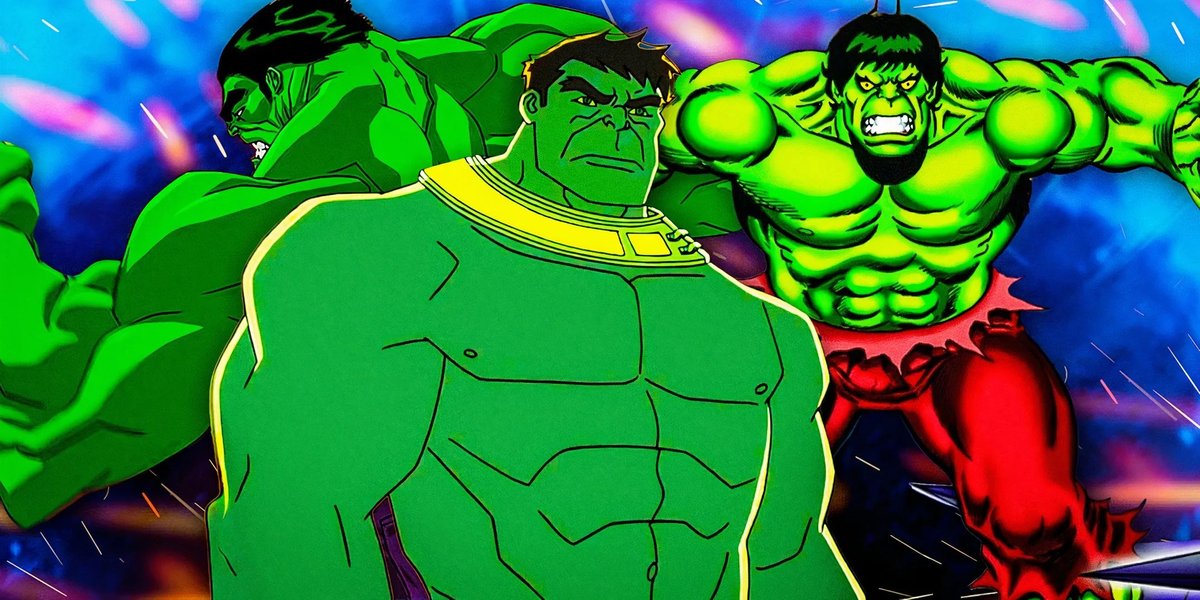
The Hulk. Just hearing the name conjures images of raw, uncontrollable power, a green-skinned titan with a thunderous roar. But beneath the surface-level smashing, the relationship between Bruce Banner and his monstrous alter-ego has always been a rich vein for psychological drama, philosophical debate, and, crucially, Fan Theories & Analysis of Hulk Animated Series. While the Marvel Cinematic Universe (MCU) often hogs the spotlight for fan speculation, the various animated iterations of the Hulk offer an equally compelling, if sometimes overlooked, canvas for deep dives and imaginative analysis.
These animated adventures, from classic Saturday morning cartoons to modern streaming sagas, often provide unique takes on the gamma-powered giant, inviting viewers to dissect plotlines, character motivations, and subtle narrative clues. It's a testament to the enduring appeal of the character that, no matter the medium, fans yearn to understand the science, the psychology, and the hidden truths behind the strongest one there is.
At a Glance: What You'll Discover About Hulk Animated Theories
- Why Animated Series are Prime for Theories: Explore how the unique storytelling methods of animation foster deep fan analysis.
- Thematic Underpinnings of Animated Hulk: Understand the core struggles and evolutions that drive speculation.
- Categorizing Hulk Theories: Learn about psychological, power, lore, character arc, and motivation-based theories.
- How to Craft Your Own Theories: A practical guide to developing well-supported observations.
- Common Pitfalls: Recognize and avoid mistakes in fan analysis.
- The Enduring Value of Fandom: Why dissecting these shows enriches the viewing experience.
Beyond the Roar: Why Animated Hulk Sparks So Much Theorycrafting
Animation, by its very nature, offers a unique sandbox for storytelling. Freed from some of the practical constraints of live-action, animated Hulk series can explore fantastical elements, character designs, and narrative arcs with incredible flexibility. This narrative freedom, however, also leaves ample room for interpretation, inconsistencies, and intriguing mysteries that fans love to dissect.
Each animated series often brings a fresh perspective to the Hulk mythos, whether it's the more dramatic and character-driven The Incredible Hulk (1996) or the family-oriented action of Hulk and the Agents of S.M.A.S.H. These different continuities, character designs, and sometimes contradictory lore elements create a fertile ground for fans to connect the dots, fill in gaps, and even rewrite narratives in their minds. The visual language of cartoons, from subtle expressions to background details, becomes a treasure hunt for clues, prompting viewers to question "why" and "what if."
The Core of the Gamma Goliath: Enduring Themes Across Animation
Regardless of the specific animated series, certain foundational themes consistently appear, becoming the bedrock for fan theories. These are the elements that define the Hulk and Banner, and their complex relationship:
- The Banner-Hulk Divide: The perpetual internal struggle between the brilliant but timid scientist and his raging, powerful alter-ego. Theories often revolve around who is truly in control, whose will is dominant, and the potential for a genuine truce or integration.
- Evolution of Power and Persona: Hulk isn't always just "Hulk." Across animated series, we've seen various forms—Grey Hulk, Maestro-like figures, intelligent Hulks. Fans theorize about the triggers for these changes, their power levels, and what they signify about Banner's psyche.
- Relationships and Impact: How Hulk interacts with allies like Betty Ross, Rick Jones, or even other gamma-powered beings, and the broader world's fear or acceptance of him. These dynamics often reveal deeper truths about the character that fuel fan discussions.
Blueprint for Speculation: Categories of Hulk Animated Theories
To effectively analyze and contribute to the vibrant world of Hulk fan theories, it helps to understand the common categories these speculations fall into. By applying these lenses, you can uncover hidden layers within your favorite animated series.
Psychological Theories: Delving into Gamma-Irradiated Minds
These theories probe the deepest corners of Bruce Banner's psyche and the burgeoning consciousness of the Hulk. They explore trauma, repression, emotional triggers, and the mental landscape of a man constantly at war with himself. For instance, fans might analyze why a particular animated Hulk struggles with speech in one episode but is articulate in another, attributing it to Banner's subconscious influence or the Hulk's own evolving intelligence.
Consider theories that explore the deep psychological impact of extended transformations. Even without a direct "Sakaar" storyline in many animated series, the prolonged dominance of the Hulk persona naturally leads fans to speculate on the lasting mental and emotional toll on Banner once he reverts. Does it make him more detached? Does the Hulk develop a separate identity more fully? These are rich questions for animated analysis.
Power & Physiology Theories: Unpacking the Limits of Strength
Hulk is synonymous with strength, but even the strongest has limits. Theories in this category scrutinize Hulk's power levels, specific abilities (like leaping, thunderclaps, or healing factor), and potential weaknesses. Fans often debate how a particular animated villain manages to challenge Hulk, looking for strategic clues or hidden vulnerabilities in his physiology.
For example, when an animated Hulk is incapacitated, fans might theorize that a villain exploited a specific frequency or a rare chemical compound that affects his gamma radiation, rather than simply overpowering him. These theories can also extend to how the world at large perceives him, leading to discussions about the societal impact of Hulk's unpredictable presence. This fear could be theorized to influence the strategies deployed against him, or even how Banner himself tries to control the transformations in public.
Lore & Continuity Theories: Connecting the Animated Dots
Animated universes, much like comic books, often have sprawling and sometimes inconsistent continuities. Theories here attempt to reconcile discrepancies, explain unexplained plot points, or link different animated series into a larger, cohesive narrative. Fans might speculate on whether a specific event in one Hulk cartoon subtly influences another Marvel animated show, or if a minor character's background hints at a larger lore connection.
When you Explore the Hulk cartoon series in depth, you'll quickly notice variations. Is the Grey Hulk from one series the same Grey Hulk from the comics, or an entirely new interpretation? What caused a particular gamma mutation to manifest differently in different characters across shows? These are the kinds of questions that drive lore-focused theories, seeking to build a unified understanding out of disparate animated narratives.
Character Arc Theories: The Evolution of Banner and His Monster
Every character, even an ostensibly static force like the Hulk, undergoes some form of development. These theories focus on the long-term changes in Bruce Banner's struggle, the Hulk's intelligence, and their dynamic relationship. Fans explore whether Banner is slowly gaining more control, whether the Hulk is becoming more sentient, or if a permanent integration is inevitable.
Take, for example, the concept of a "Professor Hulk" – an intelligent, merged form of Banner and Hulk. While often associated with the MCU, many animated series have flirted with or fully embraced intelligent Hulk forms. Theories might explore the potential consequences of integrated Hulk forms within an animated context. Does gaining Banner's intellect make Hulk less powerful, or more strategic? Does Banner feel more trapped inside the green form, even with control? Furthermore, fans might delve into the integration of Banner's intellect with Hulk's raw power as a key factor in his combat effectiveness, speculating that a "smart Hulk" might use his strength differently than a mindless rage monster.
Motivation & Trigger Theories: What Really Drives the Hulk?
Beyond the simple "anger = Hulk," these theories dive into the nuanced motivations for transformations, or conversely, for the Hulk's absence. Fans analyze Banner's emotional state, the specific threats, and even subconscious desires that might trigger or suppress the Hulk. They might ask why Hulk appears in one desperate situation but not another, or what a silent Hulk's thoughts truly are.
Consider discussions around Hulk's emotional triggers and suppression. While the specific "happy Hulk" theory is MCU-centric, the underlying idea that Banner's emotional state (beyond just rage) can influence the Hulk's appearance is highly relevant to animated series. Does Banner's underlying contentment, or perhaps an overwhelming sense of despair, keep the Hulk at bay? Similarly, theories about Banner's hidden influence on Hulk's verbalization examine if Hulk's often limited vocabulary is a result of his own burgeoning intelligence or Banner subconsciously restricting his voice.
Case Study: Decoding Theories in 'The Incredible Hulk' (1996 Series)
The Incredible Hulk animated series from the 1990s is a fantastic example of a show ripe for fan theories. With its darker tone, focus on Banner's torment, and introduction of other gamma-mutates, it offered many open-ended questions.
One prominent area for theorizing revolved around the Grey Hulk. Introduced later in the series, fans might have debated: Was Grey Hulk always dormant within Banner, a result of his repressed intellect, or a new mutation entirely? The series hinted at different gamma personalities, giving rise to theories about Banner's fractured psyche. Another common point of speculation centered on the nefarious Leader's long-term plans. Was his constant manipulation of other gamma beings a mere quest for power, or was there a deeper, more personal vendetta against Banner stemming from a shared scientific past not fully explored? The series’ cliffhanger ending also left ample room for theories about Betty Ross's eventual gamma sickness and Banner's desperate search for a cure, prompting fans to imagine future outcomes not explicitly shown.
Crafting Your Own Gamma-Sized Theories: A Guide for the Aspiring Analyst
Developing a compelling fan theory isn't just about wild speculation; it's a process of careful observation and logical deduction. Here's how you can approach analyzing Hulk animated series with a critical, theory-crafting eye:
- Observe Closely: Pay meticulous attention to details. Watch episodes multiple times. Notice background elements, character expressions, subtle dialogue choices, and even inconsistencies in animation that might hint at a deeper meaning or a mistake in continuity.
- Question Everything: Don't just accept what's shown at face value. Ask "why?" Why did Hulk react that way? Why didn't Banner transform then? Why was this specific piece of equipment used? Why is this character's motivation unclear?
- Contextualize: Relate your observations back to established lore within the show itself, or even to the broader Marvel comic universe (if the show clearly draws inspiration). Does this scene echo a famous comic storyline? Does it contradict a previous episode's established facts?
- Formulate a Hypothesis: Based on your observations and questions, come up with a clear, concise statement that proposes an answer or an alternative explanation. This is your theory.
- Gather Evidence: Crucially, support your theory with concrete examples from the animated series. Point to specific scenes, lines of dialogue, visual cues, or character actions that back up your claim. The more evidence, the stronger the theory.
- Consider Counterarguments: A robust theory anticipates and addresses potential arguments against it. Think about scenes or facts that seem to contradict your theory and try to explain how your theory can still hold true, perhaps by offering an alternative interpretation of those contradictory elements.
Pitfalls to Avoid: The Green-Eyed Monster of Bad Theories
While theorycrafting is fun, not all theories are created equal. Avoid these common traps to ensure your analysis is grounded and respected:
- Confirmation Bias: Only looking for evidence that supports your theory while ignoring anything that contradicts it.
- Confusing Fanon with Canon: Remember, your theory is a speculation, not an established fact of the series unless confirmed by creators or explicitly shown.
- Ignoring Direct Contradictory Evidence: If an episode explicitly states something that disproves your theory, you either need to adjust your theory or abandon it.
- Over-relying on External Media: While comics or other Marvel properties can inspire, don't assume something true in the MCU or comics is automatically true for a specific animated series unless there's direct evidence within that series. Each animated continuity has its own rules.
- Jumping to Conclusions: Don't base a grand theory on a single, minor detail that could easily be an animation error or a simple narrative shorthand.
The Unstoppable Force of Fandom: Why We Keep Theorizing
The enduring appeal of the Hulk in his various animated forms isn't just about action-packed battles. It's about the eternal struggle of identity, control, and immense power wielded by a tormented soul. Fan theories offer a way to deepen our engagement with this complex character, transforming passive viewing into active, critical analysis.
This process of dissecting, debating, and creating new interpretations builds vibrant communities of fans, extending the life of beloved series long after they've aired. It allows us to feel a greater sense of ownership and understanding, turning us from mere spectators into active participants in the ongoing saga of the Green Goliath. It's a testament to powerful storytelling when a narrative invites such detailed scrutiny.
Your Next Roar: Continuing the Analysis
The world of Hulk animated series is vast, varied, and perpetually fascinating. Whether you're rewatching a classic from the 90s or catching up on more recent appearances, remember to bring your critical eye and analytical mind. The next great theory might just be waiting for you to uncover it. So, dive back into the gamma-irradiated adventures, observe closely, question everything, and contribute your own insights to the incredible legacy of the Hulk.