In the vast, roaring pantheon of Marvel's heroes, few characters command attention quite like the Hulk. His transformation from brilliant scientist Bruce Banner into the gamma-powered green Goliath is a spectacle, but it's the sheer vocal force behind that transformation that truly defines him across countless animated series, films, and video games. Unpacking the complex world of Voice Actors & Production Insights for Hulk Cartoons reveals a fascinating interplay of raw talent, technical prowess, and a deep understanding of what makes the Jade Giant tick—or, more accurately, smash.
It’s a journey from guttural grunts to articulate rage, and sometimes, even intellectual musings, all delivered by a surprisingly diverse range of vocal artists. Forget simply "shouting loudly"; voicing the Hulk is an intricate craft, demanding stamina, nuance, and a consistent ability to convey immense power and underlying emotion with little more than a roar.
At a Glance: The Roaring Truth About Hulk's Voices
- A Multitude of Monsters: The Hulk has been voiced by an incredible 72 different actors across 95 unique appearances, demonstrating the character's enduring popularity and adaptability through various interpretations.
- The Reign of Fred Tatasciore: Modern audiences primarily associate the Hulk's booming voice with Fred Tatasciore, who has lent his formidable talents to the character in a staggering 44 titles, making him the most prolific Hulk voice actor by far.
- From Grunts to Gravitas: Hulk's vocalizations range from simple, powerful grunts in early iterations to more complex, articulated dialogue, especially with interpretations like Professor Hulk.
- Beyond Just Volume: Portraying the Hulk requires more than just a loud voice; it demands conveying emotion—rage, confusion, sadness, even playfulness—through limited dialogue and powerful vocalizations.
- A Cross-Media Challenge: Voice actors must adapt their performance for different mediums, whether it's the rapid-fire action of a video game, the character arc of an animated movie, or the episodic nature of a TV series.
- The MCU Connection: Live-action actors like Mark Ruffalo and Lou Ferrigno have crossed over to voice the animated Hulk, bringing a sense of continuity from the big screen.
The Seismic Shift: Understanding Hulk's Vocal Legacy
From his very first animated appearances, the Hulk's voice has been a critical element of his identity. It's the primal scream of uncontrolled power, the deep growl of barely contained fury, and sometimes, the surprisingly tender tone beneath the monstrous exterior. The challenge for any voice actor taking on the role is immense: how do you give voice to a being of pure, raw strength while also hinting at the tormented human within?
Early interpretations often relied on simple, powerful grunts and roars, establishing the Hulk as an almost pure force of nature. As animation evolved, and narratives grew more complex, so too did the demand for a more nuanced vocal performance. The voice of the Hulk had to convey not just his destructive capabilities, but also his frustration, his occasional loneliness, and even his surprising moments of heroism. This evolution mirrors the character's own journey in the comics, moving from a mindless brute to a complex anti-hero.
The Titans of "Hulk Smash!": Key Voice Actors Across Eras
The journey through Hulk's vocal history is a fascinating one, marked by iconic performances that have shaped how we hear the character. With 72 different actors bringing him to life across 95 incarnations, it's clear there's no single definitive voice, but rather a rich tapestry of interpretations.
Fred Tatasciore: The Modern Hulk Connoisseur
If you've watched any significant amount of Marvel animation or played a Marvel video game in the last two decades, you've likely heard Fred Tatasciore as the Hulk. With an astounding 44 titles to his name, Tatasciore isn't just a voice actor; he's the voice of the modern animated Hulk. His performances span a staggering range of productions:
- Television: Hulk and the Agents of S.M.A.S.H. (where he also voiced other Hulks), Avengers Assemble, Ultimate Spider-Man, Guardians of the Galaxy, Marvel Future Avengers, Spider-Man (2017), LEGO Marvel Avengers series (e.g., Strange Tails, Mission Demolition, Code Red).
- Animated Movies: Hulk: Where Monsters Dwell, Marvel’s Super Hero Adventures: Frost Fight, Iron Man & Captain America: Heroes United, Iron Man & Hulk: Heroes United, Ultimate Avengers, Ultimate Avengers 2: Rise of the Panther, Next Avengers: Heroes of Tomorrow, Hulk Vs..
- Video Games: Marvel Rivals, Marvel Mystic Mayhem, Marvel's Midnight Suns, Marvel Dimension of Heroes, Marvel Ultimate Alliance 3: The Black Order, Marvel Powers United VR, Marvel VS Capcom Infinite, Disney Infinity 2.0: Marvel Super Heroes, Lego Marvel Super Heroes, Marvel Heroes, The Avengers: Battle for Earth, Ultimate Marvel vs. Capcom 3, Marvel vs. Capcom 3: Fate of Two Worlds, Marvel: Ultimate Alliance 2, The Incredible Hulk (2008 Video Game), The Incredible Hulk: Ultimate Destruction.
Tatasciore's success lies in his remarkable versatility. He can deliver the bone-rattling roar of a feral Hulk, the gruff but heroic lines of a team player, and even the more contemplative tones needed for specific narratives. He often manages to imbue his Hulk with a surprising amount of pathos, allowing audiences to feel empathy beneath the brute force. His voice is deep, gravelly, and instantly recognizable, perfectly capturing the immense power and often tragic nature of the character.
Lou Ferrigno: From Live-Action to Animation's Grunts
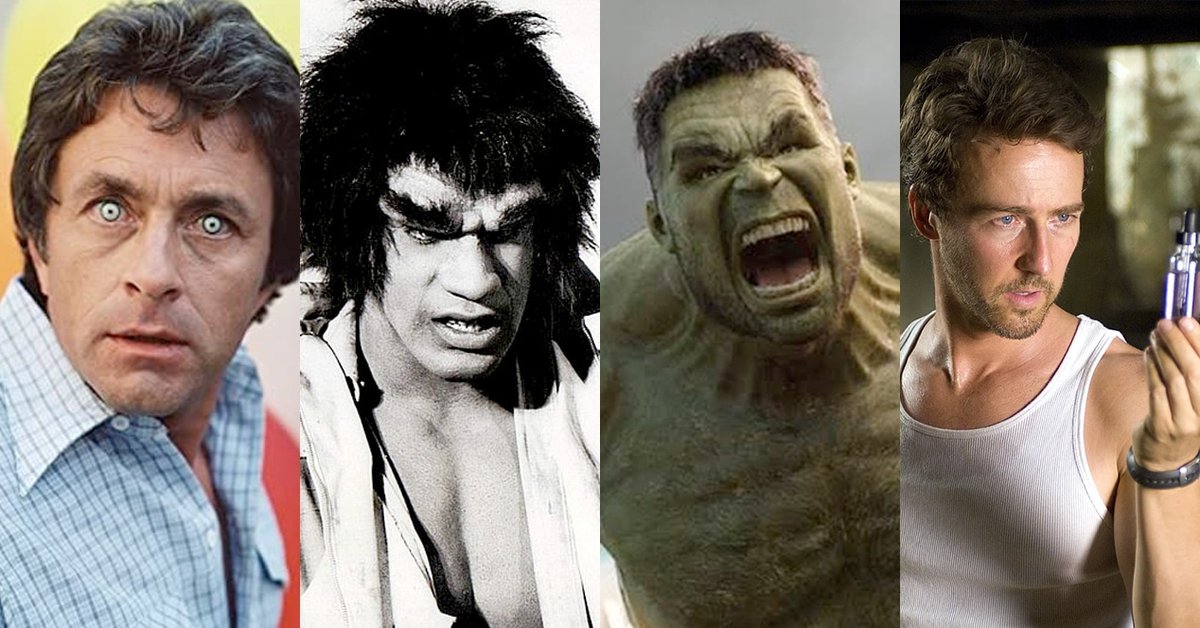
For many, Lou Ferrigno is the Hulk, thanks to his iconic live-action portrayal in The Incredible Hulk TV series from 1978. His connection to the character didn't end with the live-action show; he often provided vocalizations for the animated versions of the Hulk. While typically limited to growls, grunts, and roars, Ferrigno's contributions in titles like The Incredible Hulk (1996) (1996 TV Show) and even the 2012 live-action The Avengers movie (alongside Mark Ruffalo) serve as a powerful bridge between the character's different incarnations. His voice work, though sparse in dialogue, cemented a consistent, primal sound for the Hulk across media.
Mark Ruffalo: The MCU's Banner-Hulk Blend
With the advent of the Marvel Cinematic Universe (MCU), Mark Ruffalo took on the live-action role of Bruce Banner and his monstrous alter ego. His performance redefined the character for a new generation, introducing a Hulk who could eventually integrate Banner's intellect. Ruffalo brought this nuanced portrayal into the animated world, voicing the character in Marvel's What If...? and contributing to films like Avengers: Endgame and Avengers: Infinity War. His voice provides a direct link to the cinematic universe, adding an authentic layer for fans who grew up with his interpretation. His Hulk often has more dialogue, showcasing a calmer, more articulate, yet still physically imposing, version.
Travis Willingham: A Force in Early 2010s Animation
Another prolific voice actor who left his mark on the Hulk was Travis Willingham. Active during a period when several key Marvel animated shows and video games were produced, Willingham voiced Hulk in:
- The Super Hero Squad Show (2009 TV Show)
- Marvel Super Hero Squad (2009 Video Game)
- Marvel Super Hero Squad: The Infinity Gauntlet (2010 Video Game)
- Marvel Super Hero Squad Online (2011 Video Game)
- Marvel Super Hero Squad: Comic Combat (2011 Video Game)
- Avengers Initiative (2012 Video Game)
- Various Marvel Mashup shorts (2012)
Willingham brought a slightly more boisterous and often comedic edge to the Hulk, particularly in the lighter-hearted Super Hero Squad Show, demonstrating how different productions require distinct vocal approaches.
Other Notable Voices: The Breadth of the Green Goliath
The extensive list of Hulk's voice actors highlights the character's wide reach:
- Peter Cullen: The legendary voice behind Optimus Prime, also lent his talent to the Hulk in Spider-Man and His Amazing Friends (1981 TV Show), showcasing an early, classic take.
- Bob Holt: Voiced the Hulk in The Incredible Hulk (1982) (1982 TV Show), providing a more articulate, yet still powerful, rendition.
- Ron Perlman: Known for his distinctive gravelly voice, Perlman voiced Hulk in Fantastic Four (1994) and Iron Man (1994), offering a darker, more menacing tone.
- Rick D. Wasserman: Delivered a powerful and emotionally resonant performance as the primary Hulk in the acclaimed animated movie Planet Hulk (2010), embodying a more heroic, gladiatorial version.
- Darin De Paul: Took on the role for the 2020 Avengers (Video Game) and even Marvel's Avengers (Commercials), bringing a contemporary, video game-focused interpretation.
- Armen Taylor: Currently voices Hulk in more recent animated shows like Spidey and Iron Man: Avengers Team-Up! (2025 TV Show) and Spidey and His Amazing Friends (2021 TV Show), catering to a younger audience with a friendlier, less intimidating Hulk.
- James Blight: Another voice for the younger LEGO Marvel animated series (e.g., LEGO Marvel Avengers: Time Twisted, Loki in Training, Climate Conundrum), providing a versatile performance for these lighthearted takes.
- John Paul Karliak: Portrays the Hulk in the much-anticipated X-Men '97 (2024 TV Show), indicating new interpretations continue to emerge.
Each actor, whether for a single appearance or dozens, contributes to the rich sonic legacy of the Hulk, proving that while his color is green, his vocal palette is anything but monochrome. For an even deeper dive into the world of Marvel's green behemoth in animation, you can explore All about Hulk cartoons.
Beyond the Mic: The Production Nuances of Bringing Hulk to Life
Voicing the Hulk is far more than just performing lines. It's a complex dance involving casting, vocal technique, sound design, and creative direction, all aimed at delivering a performance that resonates with audiences.
Casting the Colossus: Finding the Right Roar
Casting for the Hulk isn't just about finding a loud voice. Directors and casting agents look for:
- Vocal Power & Endurance: The role demands intense vocal output, so actors need strong, durable voices capable of sustaining screams, growls, and shouts without damage.
- Emotional Range: Can the actor convey rage, sorrow, confusion, or even subtle humor through a character with limited dialogue? This is crucial for connecting with the audience.
- Gravitas: The Hulk is a force of nature. His voice needs to convey immense weight and power, making his presence felt even before he speaks (or roars).
- Versatility: Depending on the iteration (feral Hulk, intelligent Hulk, goofy Hulk), the actor might need to shift their vocal delivery significantly. Fred Tatasciore exemplifies this with his ability to handle various Hulk personalities.
The Nuance of Rage: Communicating Through Primal Sounds
It’s easy to assume the Hulk is just about mindless smashing. However, even his most primal vocalizations are carefully crafted. A subtle shift in pitch or a particular guttural quality can communicate different emotions:
- A deep, rumbling growl: Impending threat, simmering anger.
- A sharp, explosive roar: Sudden outburst of rage, warning.
- A softer, more strained groan: Pain, confusion, or sadness.
- A thoughtful, gruff tone: When playing a more intelligent Hulk, conveying contemplation.
Voice directors work closely with actors to ensure these nuances are delivered effectively, ensuring that the Hulk's limited vocabulary still tells a rich story.
Recording Challenges: The Physical Toll and Technical Tricks
Voicing the Hulk is physically demanding. Actors often expend immense energy, leading to vocal strain. Production insights reveal several techniques used to manage this:
- Pacing Sessions: Breaking up long sessions with breaks to rest the voice.
- Vocal Warm-ups: Extensive warm-ups are crucial to prepare the vocal cords for strenuous activity.
- Microphone Technique: Actors may pull back from the mic for louder roars to avoid distortion, or angle themselves to capture specific vocal qualities.
- Layering Vocals: Sometimes, multiple takes or even multiple actors' voices are layered in post-production to create a truly massive, overwhelming sound.
Adapting to Different Tones: From "Hulk Smash!" to Professor Hulk
The Hulk has many faces, and his voice must reflect them. Compare the primal roars of an early Savage Hulk to the calm, gruff intelligence of Professor Hulk (or Smart Hulk). Actors like Fred Tatasciore demonstrate this range beautifully, moving from projects like Hulk and the Agents of S.M.A.S.H. (where he balances various Hulk personalities) to more straightforwardly aggressive roles. The production team helps by providing clear character briefs and reference material.
The Director's Role: Guiding the Performance
Voice directors are pivotal. They are responsible for:
- Maintaining Consistency: Ensuring the Hulk's voice remains consistent across episodes or scenes, even if recorded on different days.
- Eliciting Performance: Drawing out the best vocal performance, guiding the actor through the emotional arc of a scene.
- Technical Oversight: Working with sound engineers to capture the voice cleanly and effectively.
- Adapting to Animation Style: Understanding whether the Hulk in a LEGO Marvel short needs a more playful growl versus the serious gravitas required for an Avengers Assemble episode.
Sound Design & Effects: The Final Layer of Power
While the voice actor provides the raw performance, sound designers are the unsung heroes who layer in additional effects to truly make the Hulk sound colossal. This can include:
- Reverb and Echo: To make his voice sound like it's booming through a large space.
- Low-Frequency Enhancement: Boosting bass frequencies to add weight and rumble.
- Layered Growls/Roars: Combining multiple vocal elements, sometimes even animalistic sounds, to create a unique, powerful roar.
- Impact Sounds: Synchronizing his vocalizations with footfalls, punches, and destruction to amplify the perception of his strength.
These post-production elements are just as crucial as the initial vocal performance in forging the iconic sound of the Hulk.
The Ever-Evolving Hulk: Voice Direction Across Different Mediums
The demands on a voice actor portraying the Hulk shift dramatically depending on the medium. What works for a Saturday morning cartoon might not translate to a gritty video game or a cinematic animated feature.
Television Series: Consistency and Character Arcs
Animated TV series like Avengers Assemble or Hulk and the Agents of S.M.A.S.H. require a voice actor to establish a consistent vocal identity for the Hulk over many episodes. Directors focus on maintaining that characterization while also allowing for growth or changes in the Hulk's emotional state. In shows aimed at younger audiences, such as Spidey and His Amazing Friends (voiced by Armen Taylor), the Hulk's voice might be toned down to be less intimidating, emphasizing his role as a friendly giant. Conversely, more action-oriented series will lean into the powerful, aggressive vocalizations.
Animated Movies: Cinematic Gravitas
Animated films like Planet Hulk (featuring Rick D. Wasserman) or Hulk: Where Monsters Dwell (Fred Tatasciore) often have higher production values and more complex narratives. The voice performance here requires a greater sense of cinematic gravitas. Actors might need to convey deeper emotional beats, longer dialogue sequences, and a broader range of subtle expressions, all while maintaining the Hulk's inherent power. The pacing is different, often allowing for more dramatic pauses and intense emotional deliveries.
Video Games: Action, Reaction, and Sheer Volume
Video games, from Marvel Rivals to Marvel's Midnight Suns (both voiced by Fred Tatasciore), present a unique set of challenges. Voice actors must record:
- Combat Grunts & Effort Sounds: A vast library of sounds for jumping, hitting, being hit, blocking, and using special abilities. These need to convey varying degrees of effort and pain.
- Idle Dialogue: Short, repeatable lines for when the character is standing around.
- Contextual Dialogue: Lines that trigger based on in-game events, character interactions, or mission progress.
- Exertion Calls: "Hulk Smash!" and other iconic phrases that signify powerful actions.
The sheer volume of individual sound bites and lines means that vocal endurance and the ability to maintain consistency across hundreds, if not thousands, of short recordings are paramount. Actors often record these lines in segments, focusing on different emotional states or action types.
Parody Versions: Hulk for Laughs
Even in parody, the Hulk's vocal identity is distinctive enough to be a punchline. Shows like Robot Chicken (Seth Green, Adam Talbot) or Mad (Kevin Shinick) leverage the recognizable deep growl or simple phrases for comedic effect. These performances often exaggerate characteristics, highlighting the iconic nature of the Hulk's voice while subverting it for humor. Jess Harnell even spoofed the character in Drawn Together. This demonstrates how deeply ingrained the Hulk's vocal presence is in popular culture.
Behind the Scenes: A Day in the Life of a Hulk Voice Actor
What does it actually take to transform into the Hulk in a recording booth? It's a blend of physical preparation, mental focus, and collaborative effort.
- Prep Work: Before stepping into the booth, a voice actor will have studied the script, character notes, and any visual references provided. They'll understand the emotional beats of the scenes and the specific iteration of Hulk they're portraying. Vocal warm-ups are non-negotiable, preparing the voice for high-intensity work.
- The Recording Booth: The actor enters a soundproof booth, where they're isolated from external noise. Headphones allow them to hear the director, the engineer, and their own voice. The microphone setup is crucial for capturing the depth and power of their performance.
- Taking Direction: The director guides the actor through the script, offering feedback on tone, intensity, and pacing. For the Hulk, this often involves specific instructions on the "texture" of a roar or the inflection of a limited line of dialogue. "Can you make that roar sound more frustrated?" or "Give me a 'Hulk Smash!' that feels like it's coming from his gut."
- Physicality of Performance: Voicing the Hulk isn't just about sound; it's often a full-body performance. Actors might move, tense their muscles, or even punch the air to channel the character's physicality, which translates into a more authentic vocal delivery.
- Maintaining Vocal Health: Recording sessions for a character like Hulk can be draining. Hydration is key, and actors often take short breaks to rest their voices, sip water, or do quick vocal stretches. Pushing too hard can lead to injury, so knowing one's limits is crucial.
- Iteration and Collaboration: It's rarely a one-take wonder. Actors will perform lines multiple times, experimenting with different deliveries until the director and engineer are satisfied. This collaborative process ensures the final product is perfect.
The process is demanding but incredibly rewarding, allowing these skilled artists to inhabit one of pop culture's most powerful figures.
Common Misconceptions About Voicing Hulk
The unique nature of the Hulk's voice often leads to certain misunderstandings. Let's clarify a few:
- "It's just shouting into a mic."
No. While loudness is a component, it's far from the only one. Voice acting for the Hulk requires immense control, intentionality, and the ability to convey a wide range of emotions through non-verbal cues and limited dialogue. A raw, uncontrolled scream sounds vastly different from a carefully modulated roar of rage or a grumbled expression of confusion. It’s acting, pure and simple, just done with the voice. - "Anyone with a deep voice can do it."
Again, no. While a deep voice is certainly an asset, the endurance, vocal technique, and acting chops required are highly specialized. Many actors can produce a loud sound, but few can sustain that intensity, imbue it with specific emotions, and maintain vocal health over long recording sessions and multiple productions. - "Voice actors for Hulk are interchangeable."
This couldn't be further from the truth. As seen with the distinct contributions of Fred Tatasciore, Lou Ferrigno, Mark Ruffalo, and Travis Willingham, each actor brings a unique flavor, personality, and vocal texture to the character. Fans often have strong preferences for specific Hulk voices based on the iteration and emotional depth they provide. The subtler nuances in their performances are precisely what differentiate them and define specific animated eras for the character.
Future Roars and the Enduring Legacy Ahead
The Hulk is an evergreen character, constantly reimagined and reintroduced to new generations. As animation styles evolve and storytelling pushes boundaries, so too will the vocal demands placed on the actors portraying him. We've seen the shift from primal grunts to articulate, even humorous, dialogue, and it's likely that future iterations will continue to explore different facets of the Banner-Hulk dynamic.
The importance of continuity versus fresh interpretation will always be a balancing act. While actors like Fred Tatasciore provide a comforting, consistent voice that many now consider definitive, new productions will undoubtedly introduce new talent, eager to leave their own thunderous mark on the Green Goliath. What remains constant is the need for a powerful, evocative vocal performance that captures the essence of a character who is, at his core, a struggle between man and monster, intelligence and raw power.
The work of these dedicated voice actors and the insights gleaned from the intricate production process offer a profound appreciation for the craft involved in bringing such an iconic character to life. The next time you hear that familiar "Hulk Smash!" in a cartoon, take a moment to consider the artistry, effort, and vocal mastery behind the roar. It's a testament to the fact that even the most powerful characters rely on the human element to truly make them resonate.